Barrington Hills Estate Living and Land Insights
February 19, 2026
February 19, 2026
Dreaming of more land, more privacy, and a truly rural feel within reach of Chicago? If so, Barrington Hills should be on your short list. You get space to spread out, an active equestrian scene, and a community that intentionally protects its estate character. In this guide, you’ll learn what estate living looks like here, how zoning shapes what you can do with your land, and the practical costs to plan for. Let’s dive in.
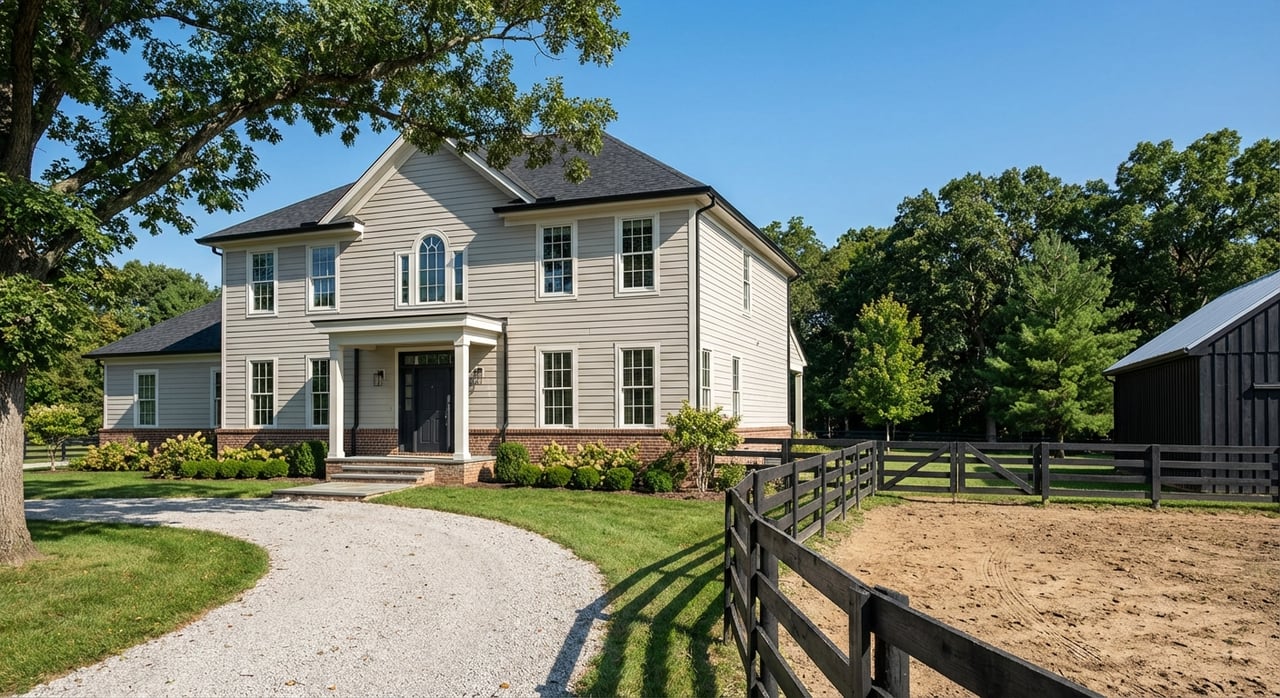
Barrington Hills sits about 40 miles northwest of Chicago and is known for its wooded terrain, rolling hills, and low-density feel. The village describes itself as semi-rural with an estate focus and a strong equestrian tradition. You see that in the large lots, long drives, and miles of bridle paths. For a quick community overview, start with the village’s own summary of its history and character on the Village of Barrington Hills site.
With a population of 4,114 and a footprint of roughly 27.6 square miles, the area delivers space and privacy you won’t find in most suburbs. The village spans multiple counties, which helps explain why parcels can feel so varied across the landscape. You can find those quick facts on the Barrington Hills Wikipedia page.
If you want elbow room, you’ll find it here. True estates often sit on five acres or more, with mature trees, long setbacks, and private approaches. Many properties include accessory buildings such as barns, workshops, or guest quarters. You also see a mix of custom homes and updated farm properties that retain a classic, timeless look.
Barrington Hills is a rider’s destination. The Riding Club of Barrington Hills documents over 150 miles of bridle trails that weave through public Forest Preserve land and private segments available by landowner permission and club membership. If trail access matters to you, review the Riding Club’s trail information and rules and confirm the exact access that applies to any parcel you’re considering.
Open space is part of the fabric here. Conservation groups have protected significant acreage around key natural areas, which helps preserve viewsheds and the semi-rural character. Recent conservation acquisitions around Spring Creek and Hill N’ Dale show how community priorities shape the landscape long term. You can read an example update on Garfield Farm Museum’s news page.
Barrington Hills’ zoning is central to its estate identity. Minimum residential lot areas are among the largest in the region, with R1 at 5 acres, R2 at 3 acres, R3 at 2 acres, and R4 at 1 acre. Agricultural uses follow a 5-acre minimum across districts. You can confirm these standards in the village zoning code.
The code outlines what you can build and where it can go. It governs setbacks, bulk, and special uses, which matter if you plan to add a stable, arena, or larger accessory structure. Before you buy or renovate, check the parcel’s zoning classification and review any conditions that might affect your plans.
Access to private bridle paths is based on landowner permission and club membership rules. Even if a map shows nearby trails, your rights can vary by parcel. Always verify recorded easements, membership requirements, and current permissions with the Riding Club of Barrington Hills before you rely on trail access as a key feature.
Many estate properties in Barrington Hills rely on private septic systems and on-site wells. The building and zoning rules require sufficient area for proper sewage disposal and for plot plans to show septic and well locations when applying for permits. Review the relevant sections of the village code on sewage and water requirements and ask for inspection records before you close.
Septic costs vary by site and system type. Third-party cost guides show a wide range for installation and replacement, often from a few thousand dollars to much more for complex sites. For a general primer on possible costs, see this Fixr overview of septic system pricing. Plan on regular pumping and inspections, commonly every 3 to 5 years.
Rural estates may use a mix of overhead electric, propane, private wells, and septic. Broadband availability can vary by street and service provider. The village and county rules govern permits for upgrades, so confirm options and capacity for electricity, gas, and internet at the specific address. For a snapshot of local context, review the village’s community overview.
Long driveways, culverts, and private roads add maintenance responsibilities that many suburbs handle for you. If the property sits on a private road, request the road maintenance agreement and understand your share of plowing, repairs, and reserve contributions. Budget for snow removal, tree work, and periodic paving to keep access reliable year round.
Barrington Hills spans multiple counties and taxing districts, so tax bills vary by parcel. Illinois property taxes are comparatively high versus many states, which can affect total ownership costs. If you plan to keep horses or add a barn, consult an insurance professional who understands equestrian coverage for structures and livestock.
Use this quick list to save time and reduce surprises:
You value privacy, open space, and a connection to nature. You might keep horses, want a hobby farm, or simply prefer a larger lot for gardens and outdoor living. You are comfortable managing or outsourcing property maintenance that comes with acreage. If this sounds like you, the estate lifestyle here will likely feel like home.
Estate properties are unique. Small details in zoning, infrastructure, and trail access can make a big difference in daily life and long-term value. If you are exploring a move, we can help you evaluate parcels, gather the right records, and coordinate expert inspections so you move forward with confidence. Ready to start? Connect with Kate Fanselow and let’s talk about your next move.
Stay up to date on the latest real estate trends.
We bring together a mix of integrity, imagination and an inexhaustible work ethic, striving to make each buying and selling experience the best possible. Contact us today to find out how we can be of assistance to you!