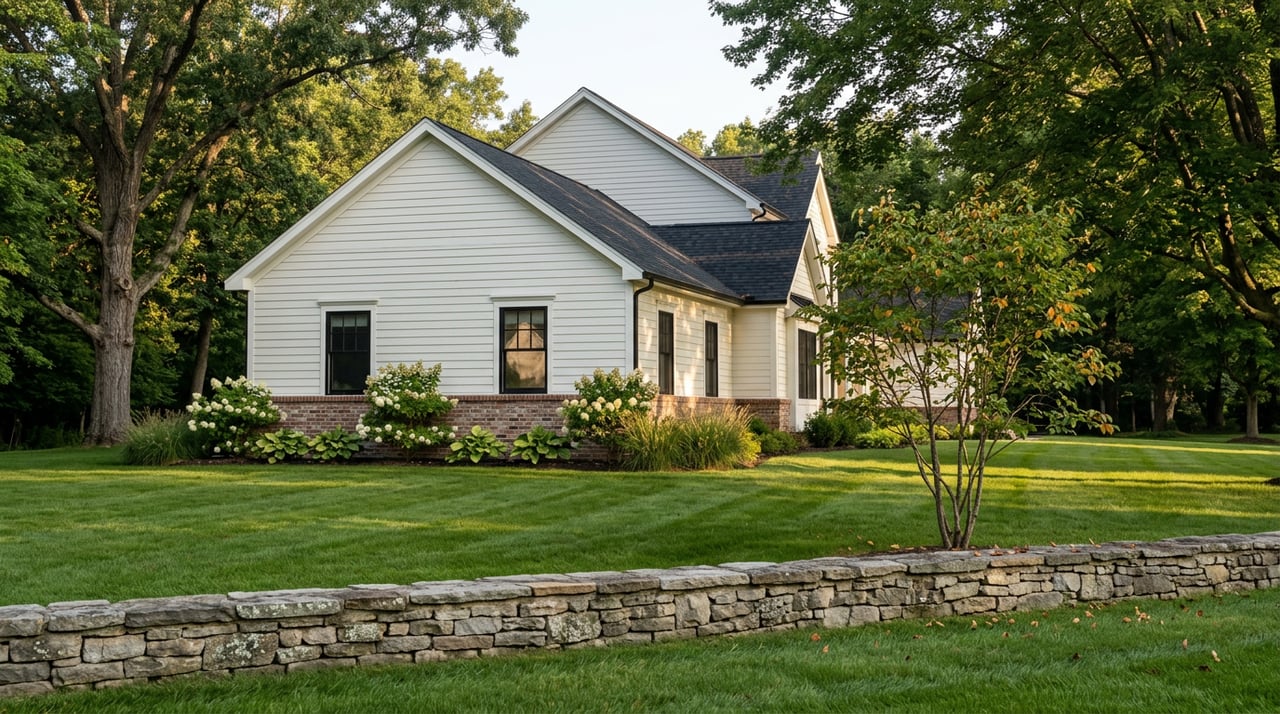
Barrington Hills Fall Bridle Paths and Horse Shows
August 20, 2026
August 20, 2026
Last September, on a Friday morning, the arenas at the Barrington Hills Park District Riding Center on Bateman Road filled before nine. Trailers pulled in, saddles came off racks, and for three days a horsemanship clinic called Cowboy Camp ran kids and adults through morning and afternoon sessions, capped with a Sunday brunch before the last lesson. It looked like a hobby weekend. It was also, whether the people loading their horses back onto trailers thought about it this way or not, one small renewal of an arrangement that has kept this village looking the way it does for almost ninety years.
That arrangement is the actual subject of this post. Barrington Hills doesn't have public parkland the way most suburbs do. It has roughly 70 miles of bridle paths that exist because private landowners agreed, one property at a time, to let them exist. Understanding that changes how the fall calendar reads.
The Riding Club of Barrington Hills was formed in 1937 as an all-volunteer social organization, and its first president, Alexander Reichmann, had settled in the area in the early 1920s on a 120-acre farm he named Oakdene. The farm itself is gone, but the house he built still stands on Oakdene Road today. Reichmann and the residents around him laid out the original bridle paths across land that was, and still is, privately owned.
Nearly a century later, the club maintains those paths through a mix of permissive and permanent deeded easements, meaning the network survives because individual landowners keep granting access, not because a park district holds title to the ground. Trails inside the Cook County Forest Preserve are open more broadly, but the paths outside it are for club members and their guests only. There is no ordinance that makes this system permanent. It runs on relationships that get renewed, literally, every time someone rides.
"Neighbors riding to visit neighbors" is how the club still describes its own purpose.
That phrase matters more than it sounds like it should. A trail system held together by neighborly agreement needs neighbors who still show up. The club has said plainly that its work preserving the bridle paths is bound up with defending the village's five-acre minimum lot size, the zoning standard that keeps Barrington Hills from looking like the subdivisions around it. Riding isn't decorative here. It's the mechanism.
The 2026 calendar already included the club's first annual Barry Fript Memorial Horse Show, held Saturday, May 2, and the Fox River Valley Pony Club's recognized Horse Trials, which the club runs most years in June at the same Riding Center and across the adjacent Spring Creek Forest Preserve. Fall picks up where that left off.
| Timing | Event | Location | What it actually involves |
|---|---|---|---|
| Late September, most years | Cowboy Camp with Mark Lyon | Barrington Hills Park District Riding Center, 361 Bateman Rd | A three-day clinic with Friday and Saturday sessions running 9 to noon and 2 to 5, and a Sunday brunch from 10 to noon before the final afternoon block |
| A September Saturday, annually | Party for the Preserves | Crabtree Nature Center | A guided walk on the Phantom Prairie Trail, family crafts, an ambassador animal talk on the center's owls and hawk, and a native seed collection session |
| Sunday, October 11, 2026 | Fall festival | Barrington Hills Park District Riding Center | Noon to 4, described by the district as its signature event, with live music, festival food, and fall decor |
None of these require owning a horse. The Riding Center itself is an unsupervised, self-managed facility open to any equestrian discipline, which is part of why it functions as a shared civic space rather than a private club amenity. Riders are asked to adjust to whatever the arena conditions happen to be that day and to leave the space the way they found it. That kind of low-friction, self-policed access is unusual for a facility this specialized, and it only works because the people using it treat it as something they're responsible for maintaining, not just consuming.
Crabtree Nature Center sits on land the Forest Preserves of Cook County bought in the mid-1960s, and it has spent the decades since slowly returning to a more natural state through restoration work. Its three unpaved trails cover roughly three miles across woodland, wetland, and prairie, and neither bikes nor dogs are allowed, a rule that keeps the walk quieter than almost anywhere else in the area.
The Phantom Prairie Trail, a two-mile loop through tall grass, was the centerpiece of last year's Party for the Preserves, held on a Saturday in late September. The day layered on family programming: crafts, a look at the resident owls and hawk, and a native seed collection session that turned visitors into unpaid restoration volunteers for an afternoon. It's a low-key event, but it draws the same logic as the horse trails a few miles away. A prairie that gets walked, watched, and seeded by the people living around it stays a prairie. One that doesn't have that attention drifts, slowly, into something else.
Crabtree is open 9 to 5 through October, closed Fridays, which matters if you're planning a visit around the fall color rather than the scheduled event. Sandhill cranes and other waterfowl are more visible in the wetlands this time of year, best seen from the blind overlooking Crabtree Lake.
Here's the part that's easy to miss if you only look at the calendar as a list of things to do. The bridle path system, the Riding Center, and even the informal culture around Crabtree's prairie walks aren't preserved by any single authority. They persist because enough residents keep participating in them, season after season, in ways that reaffirm the original private agreements that built them.
That's a different kind of infrastructure than most suburbs run on. A sidewalk gets maintained whether or not anyone walks on it. A bridle path across someone's five acres stays open only as long as that landowner, and the neighbors around them, keep treating it as worth keeping. The club's own framing of its mission ties the two together directly: protecting the equestrian tradition is how it protects the zoning that keeps those five-acre parcels intact in the first place.
So when Cowboy Camp fills the Bateman Road arenas some late-September weekend, or when a few dozen families turn out to walk Phantom Prairie on a Saturday in the fall, they're not just filling a weekend. They're doing the same quiet renewal work Alexander Reichmann's neighbors started doing in the 1920s, one ride and one walk at a time.
If you already live here, that's probably not news to your Saturday mornings. If you're new, or thinking about how a place holds its shape over decades instead of one election cycle, it's worth watching how this fall plays out. The Riding Center's fall festival on Sunday, October 11, will tell you a lot about how many people still consider that renewal work worth showing up for.
If you're curious how any of this fits into what you're looking for in the area, the Kate Fanselow team knows this village's rhythms as well as its property lines. Let's talk about your next move.
Stay up to date on the latest real estate trends.

We bring together a mix of integrity, imagination and an inexhaustible work ethic, striving to make each buying and selling experience the best possible. Contact us today to find out how we can be of assistance to you!